
Every robot I’ve built taught me something about its body and its brain.
I’m Wessam Hamid, founder of Polymorph and a Master’s student in mechanical engineering at the University of Alberta. Each robot here took me a step closer to a general-purpose robot.
Orange marks the lessons about the body. Blue marks the lessons about the brain.
ABU Robocon 2020
Robot rugby
I started out building robots for ABU Robocon, where robots play human sports. In 2020 the game was rugby. One of our robots passed the ball and the other had to catch it, score tries and kick.
ABU Robocon 2021
Throwing arrows into pots
The next season was about precision: Tou-Hu, an old Chinese game of throwing arrows into pots. An arm picked up each arrow and placed it on a shooting mechanism that changed its angle for every pot. The robot won Malaysia’s national championship and placed third internationally, finishing the three-minute run in 41 seconds.
Lesson Backlash grows along an arm. A little play at the shoulder became a big error at the gripper and sent arrows to completely different places.
Lesson People aim by watching where the last throw landed. A robot without that feedback has to get every joint exactly right.
Dull, dirty, dangerous
After Robocon I wanted to build robots for jobs that are hard on people: inspection, search and rescue and site inspection.
INSPECTo
Duct inspection and cleaning
The first was at A2Lab: robots for dirty jobs like inspecting and cleaning air ducts, while the operator stays far away from the dirt.
Artemis
Urban search and rescue
Next came search and rescue. I led the design and build of Artemis, a compact stair-climbing robot for confined spaces, and gave it mapping and semi-autonomous navigation. Its demos won startup funding from the government.
Search and rescue
Built with Malaysia’s Fire and Rescue Department (BOMBA)
That funding led to A2Tech, where I led the mechanical team on a second robot that maps disaster sites. We took it into field trials with BOMBA.
Lessons learnt
Piloting the search and rescue robot with fire and rescue teams exposed two problems.
The body didn’t fit.
It was unsuited to buildings made for people.
The brain didn’t adapt.
Its hardcoded autonomy broke on anything unplanned.
Both had to change.
That became the rule for everything I built after.
Robots in dynamic jobs become liabilities when their hardware and autonomy cannot adapt to real operating conditions.
- Embodiment matters. The robot must fit the environment and the task.
- Avoid hard-coded autonomy. Robots must learn and adapt to real conditions.
Manipulation
Arms and teleoperation
So I turned to learning. At A2Tech I drove a UR5 arm from a VR headset and trained robot arms to do archery.
Localization and mapping
On a high-speed train
Next I took learning into perception, finding defects in underground railway tunnels with sensors mounted on trains. In the tunnels the hand-written algorithm couldn’t tell if the train was going forward or backward, so the mapping failed completely.

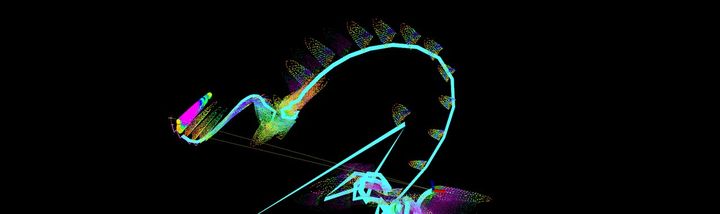
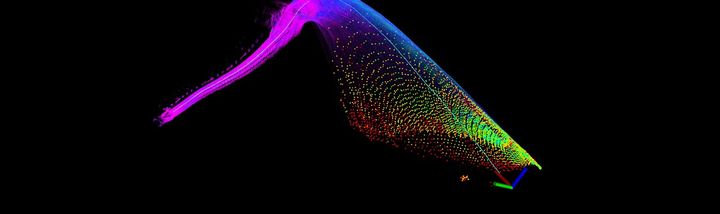
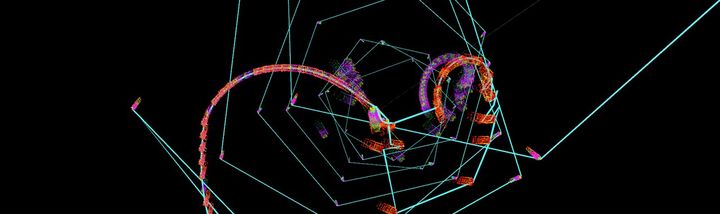
Lesson Plenty of jobs run on a train, a quadruped or a cart. A standard sensor suite and brain let the same system scale across tasks, environments and applications.
Lesson A pretrained point cloud model held up where the hand-written algorithm failed.
Machine learning and quadrupeds
At Embedded LLM the same inspection system moved onto quadrupeds, and language models helped them navigate.
Reinforcement learning
Quadrupeds in simulation
Language models
GPT-3 on a robot
Site inspection
Autonomous anomaly detection and localization
Autonomy and embodiment
The same two problems every time
Across all of these robots, two things decided whether one worked: a body that fit the job and a brain that could adapt to it.
Physical AI
AI with a body
Physical AI is the answer for the brain: a model that learns from data and gets better with every task the robot does.
Model, body and data in one loop
Which embodiment should we standardize?
Humanoids as the foundation
For the body I looked at the automotive market.
In 1908 America ran on about 20 million horses and a car cost $850. Ford standardized one body, the Model T, and his moving assembly line cut its build time from over twelve hours to about an hour and a half. By 1929 the country had more than 120,000 gas stations, and roads, suburbs, motels and car loans had grown into industries of their own.
Robotics today looks like transport before the Model T, with every machine built by hand for one job. I think a standard humanoid body can do for robots what the Model T did for cars, and the industries that grow on top of it are just as hard to picture now.
Lesson Standardization makes specialization possible at scale and grows whole new industries that nobody could picture beforehand.
Dexterity
RoninHand: a tendon-driven robotic hand
At Polymorph I started with the hands. RoninHand has all of its motors in the palm, and I trained it in simulation to rotate a ball.
Teleoperation
Human movements → robot actions → training demonstrations
For real data I built VR teleoperation. A person in a headset drives the hands and every motion is recorded for training.
Lesson People are the richest source of demonstrations for physical work.
Ronin
Built for many tasks
Ronin is the general-purpose robot I’m building at Polymorph.
The body: towards a standard humanoid embodiment
The brain: towards generalizable autonomy across tasks and environments
Ronin Control Center
One interface to simulate, teleoperate, record, train and deploy
Every step of that loop runs in one app I built.
Click a step to jump to it.
Today
Founder at Polymorph 
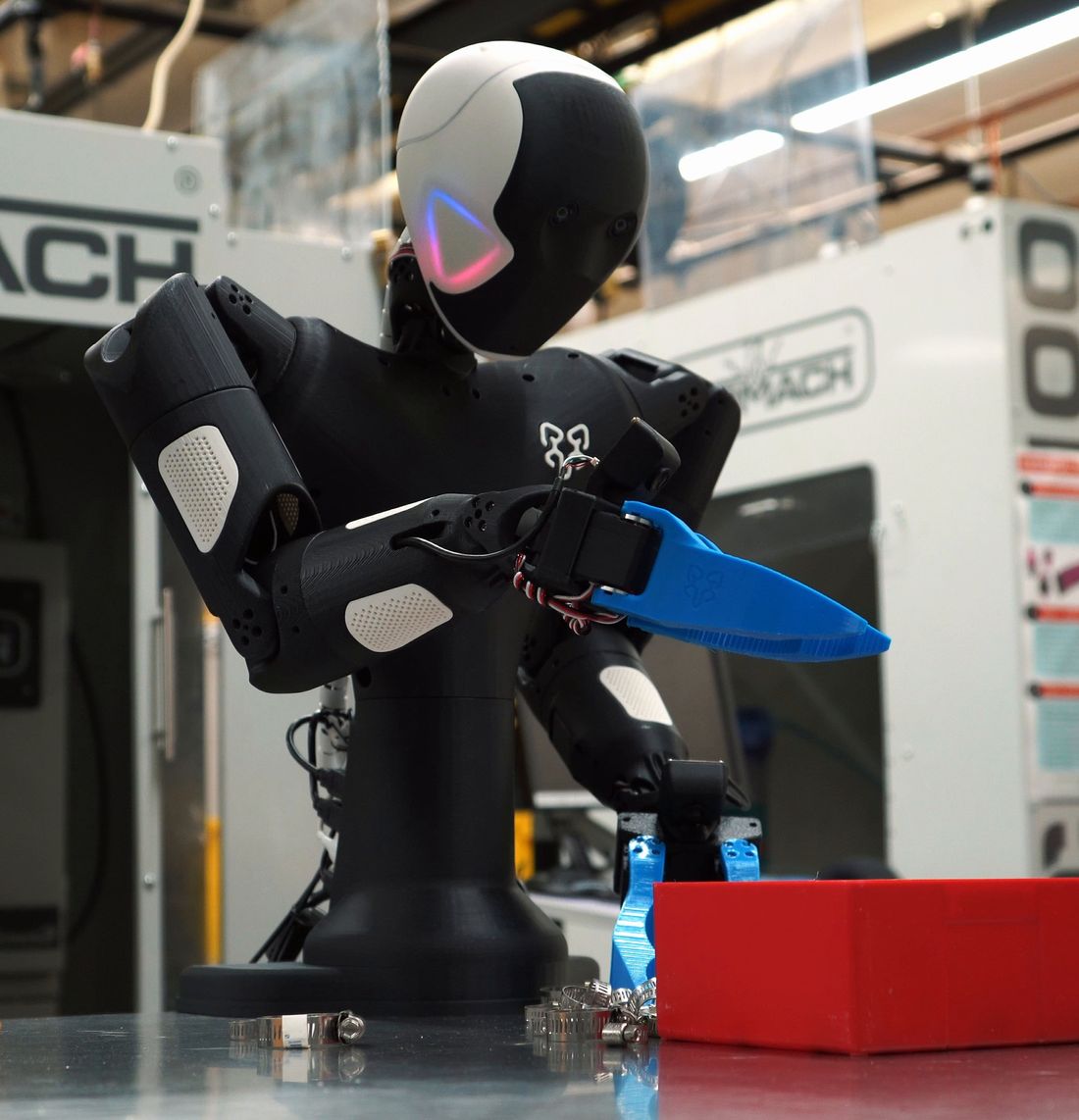
I founded Polymorph to scale civilization through general-purpose robots and make physical work optional.
Master’s student at the UofA (MEC E)
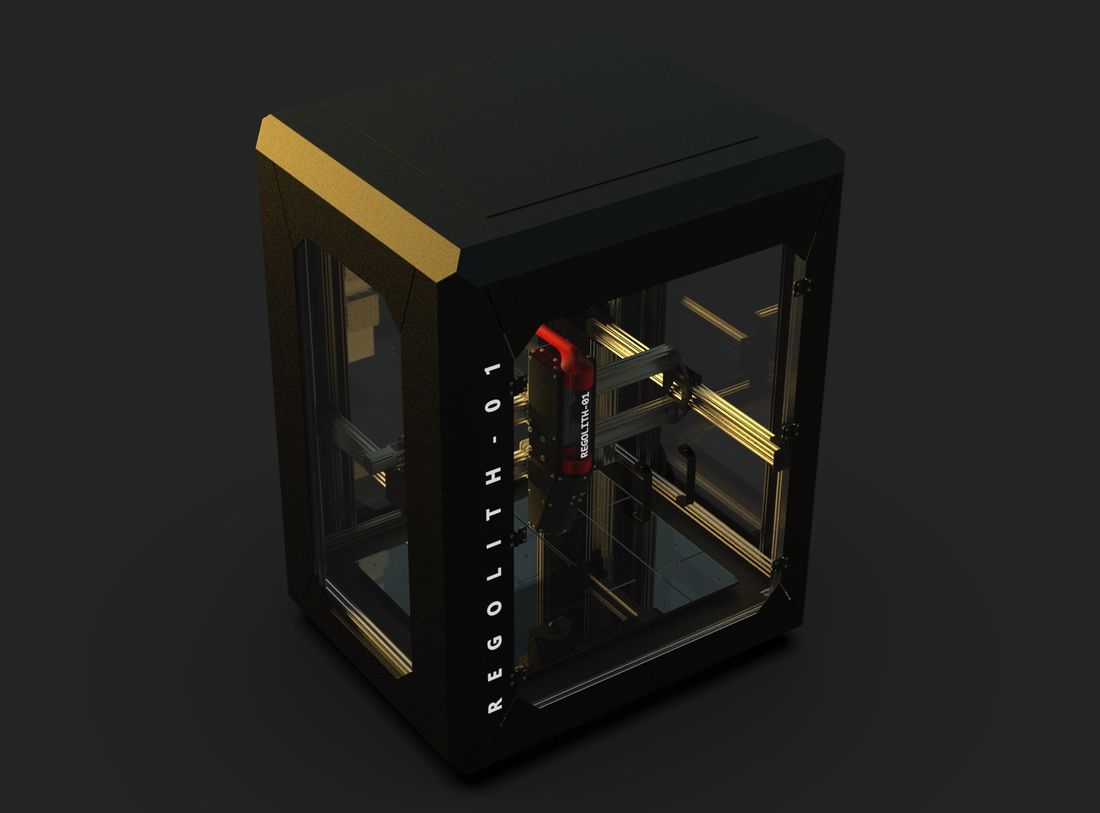
I’m building a mid-scale 3D printer to demonstrate habitat construction using simulated lunar soil and polymer binder.
Beyond imitation
Demonstrate → Imitate → Explore → Improve
Imitation gets Ronin to the operator’s level. I’m adding value-guided reinforcement learning and human-in-the-loop corrections to take it further.
Improving behaviour through experience
Value-guided reinforcement learning
Using successful and failed rollouts with learned value functions to improve robot policies.
Human-in-the-loop reinforcement learning
Combining human interventions with off-policy RL and learned reward classifiers to improve policies through real-world interaction.
World action models
Learning how actions change the physical world, then using imagined interactions to improve robot behaviour.
Get in touch
If you’re building robots or researching physical AI, I’d like to hear from you.
polymorphintelligence.com